

What You'll Learn
- How Fourier series and transforms reveal the frequency structure of signals and provide powerful methods for solving engineering problems.
- How partial differential equations describe waves, heat propagation, and other distributed physical phenomena.
- How complex functions, contour integration, residues, and conformal mapping provide practical tools for analysis in electrical engineering.
Course Description
Engineering mathematics becomes useful when mathematical structures are connected to physical problems. This course develops that connection through three major mathematical perspectives: Fourier analysis, partial differential equations, and complex-variable methods.
The course covers Fourier series, Euler formulas, half-range expansions, Parseval’s theorem, Fourier integrals and transforms, orthogonal and complete functions, transform symmetry, and the short-time Fourier transform, with applications to engineering problem solving.
Partial differential equations are studied through representative physical systems, including the one-dimensional wave equation, separation of variables, d’Alembert’s solution, the heat equation, multidimensional wave equations, Laplace’s equation in Cartesian, spherical, and polar coordinates, elliptic and hyperbolic equations, and the use of Fourier and Laplace transforms for solving PDEs.
The complex-analysis component covers analytic functions and mappings, limits and continuity, derivatives of complex functions, exponential, trigonometric, hyperbolic and logarithmic functions, inverse functions, conformal mappings, the Cauchy integral theorem and formula, contour integration, Taylor and Maclaurin expansions, residues, improper real integrals, and engineering applications including capacitance calculations.
Rather than treating these topics as isolated mathematical techniques, the course continually asks: What engineering problem does this mathematical tool allow us to see or solve?
Teaching & Evaluation Method
Topics
- Fourier Analysis
- Partial Differential Equations
- Complex Analysis
- Integral Transforms
- Electrical Engineering
Course Files
Instructor
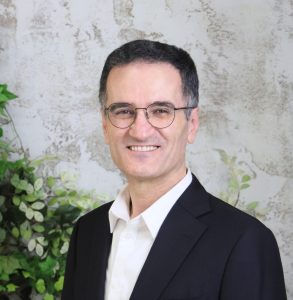
Prof. Hassan BEVRANI
IEEE Fellow
Hassan Bevrani received a Ph.D. degree in Electrical Engineering (Control Systems) from Osaka University in 2004. He is currently a full professor and the Founder of the Micro/Smart Grids Research Center (SMGRC) at the University of Kurdistan. Over the years, he has worked as an invited and visiting professor at several universities in Iran, Japan, Australia, France, Germany, and China. He is the author/coauthor of 10 international books, 18 book chapters, and over 500 journal/conference papers. Prof. Bevrani is a Fellow member of IEEE, the chairman of the Control Chapter of the IEEE Iran Section, and head of the Promotion Committee of the IEEE Iran Section. He was awarded the Allameh Tabatabaei Scientific Medal (National Foundation of Iranian Elites, 2025), an Outstanding Professor (Iran Ministry of Science, Research and Technology, 2022), IEEE Lifetime Research Award (IEEE Iran Section, 2025), and a Distinguished Professor in Electrical Engineering (Iran Academy of Science, 2025). Prof. Bevrani has also been awarded the prestigious Medal for the Promotion of Electrical Engineering Science by the Institute of Electrical Engineers of Japan (IEEJ) in 2026. His current research interests include microgrid operation and control, power system stability, and intelligent and robust control applications in the electric power industry.