

What You'll Learn
- How to turn an interesting topic into a meaningful research question and build a coherent research framework around it.
- How to critically evaluate literature, use modeling and simulation appropriately, and make responsible research decisions in the age of AI.
- How to develop, communicate, and defend a complete research proposal and how to respond constructively when research does not work as expected.
Course Description
Good research begins with a good question, not with a method, software package, or collection of papers. This course focuses on the reasoning and decisions that shape a meaningful research project.
Students learn how to formulate research questions, critically engage with the literature, identify and justify research gaps, and construct a coherent research framework. The course examines research ethics, the roles and limitations of modeling and simulation, effective scientific presentation and defense, and an often-overlooked part of research: failure, negative results, and what to do when an expected idea does not work.
Artificial intelligence is treated as an integral part of contemporary research practice rather than as a separate topic. Students examine where AI can genuinely assist research, where it can distort reasoning or evidence, and how responsibility and scientific judgment remain with the researcher.
The course is strongly outcome-oriented: by the end of the semester, each student is expected to have developed a complete proposal for their own research.
Teaching & Evaluation Method
Topics
- Research Design
- Critical Thinking
- Research Ethics
- AI in Research
- Scientific Communication
Course Files
Instructor
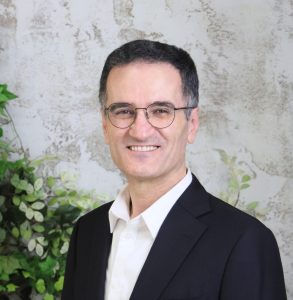
Prof. Hassan BEVRANI
IEEE Fellow
Hassan Bevrani received a Ph.D. degree in Electrical Engineering (Control Systems) from Osaka University in 2004. He is currently a full professor and the Founder of the Micro/Smart Grids Research Center (SMGRC) at the University of Kurdistan. Over the years, he has worked as an invited and visiting professor at several universities in Iran, Japan, Australia, France, Germany, and China. He is the author/coauthor of 10 international books, 18 book chapters, and over 500 journal/conference papers. Prof. Bevrani is a Fellow member of IEEE, the chairman of the Control Chapter of the IEEE Iran Section, and head of the Promotion Committee of the IEEE Iran Section. He was awarded the Allameh Tabatabaei Scientific Medal (National Foundation of Iranian Elites, 2025), an Outstanding Professor (Iran Ministry of Science, Research and Technology, 2022), IEEE Lifetime Research Award (IEEE Iran Section, 2025), and a Distinguished Professor in Electrical Engineering (Iran Academy of Science, 2025). Prof. Bevrani has also been awarded the prestigious Medal for the Promotion of Electrical Engineering Science by the Institute of Electrical Engineers of Japan (IEEJ) in 2026. His current research interests include microgrid operation and control, power system stability, and intelligent and robust control applications in the electric power industry.